Agents, skills and tools built on camera — every repo is the real one from the video, ready to clone and run.
From the videos
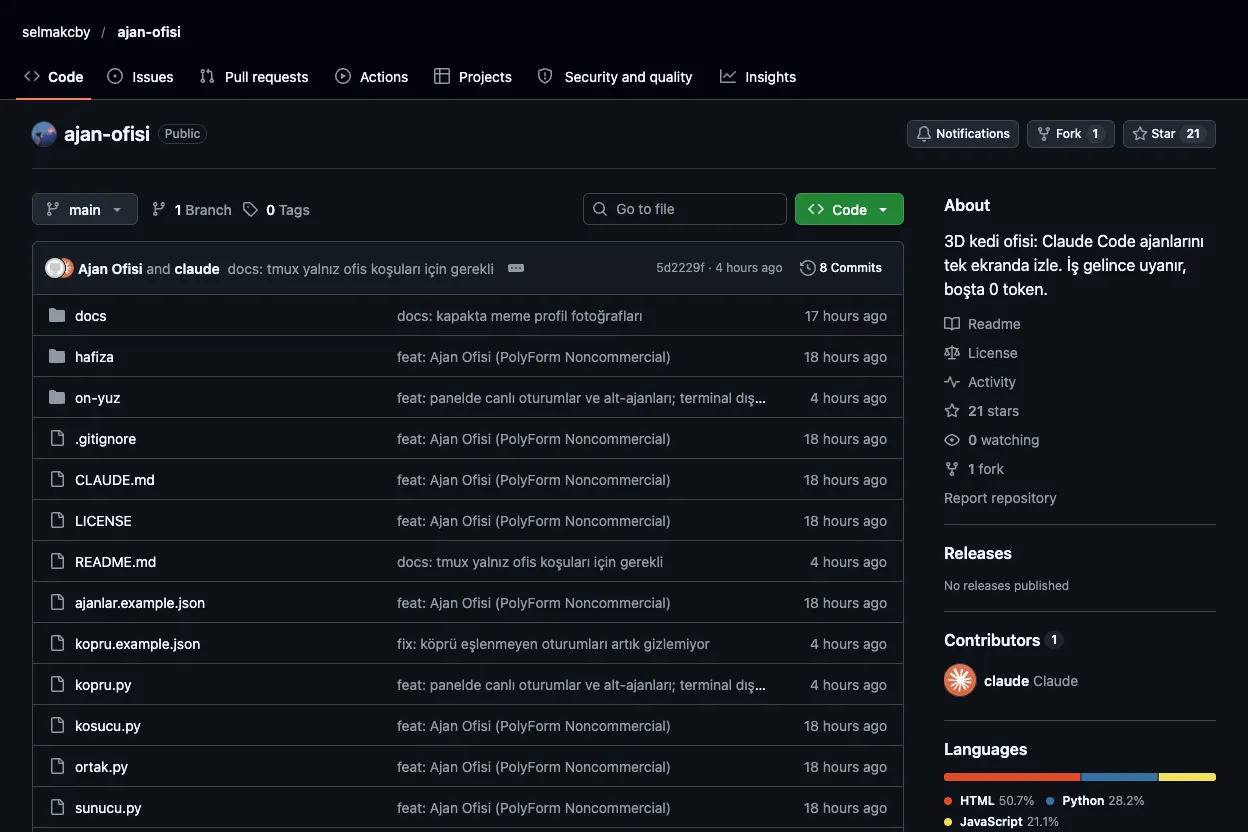
Ajan Ofisi — My Agents in One 3D Office
A 3D cat office for my Claude Code agents: each agent wakes when work arrives, and the office shows what it is doing, which model it runs and what it spent. Idle, it costs 0 tokens.
View on GitHub ↗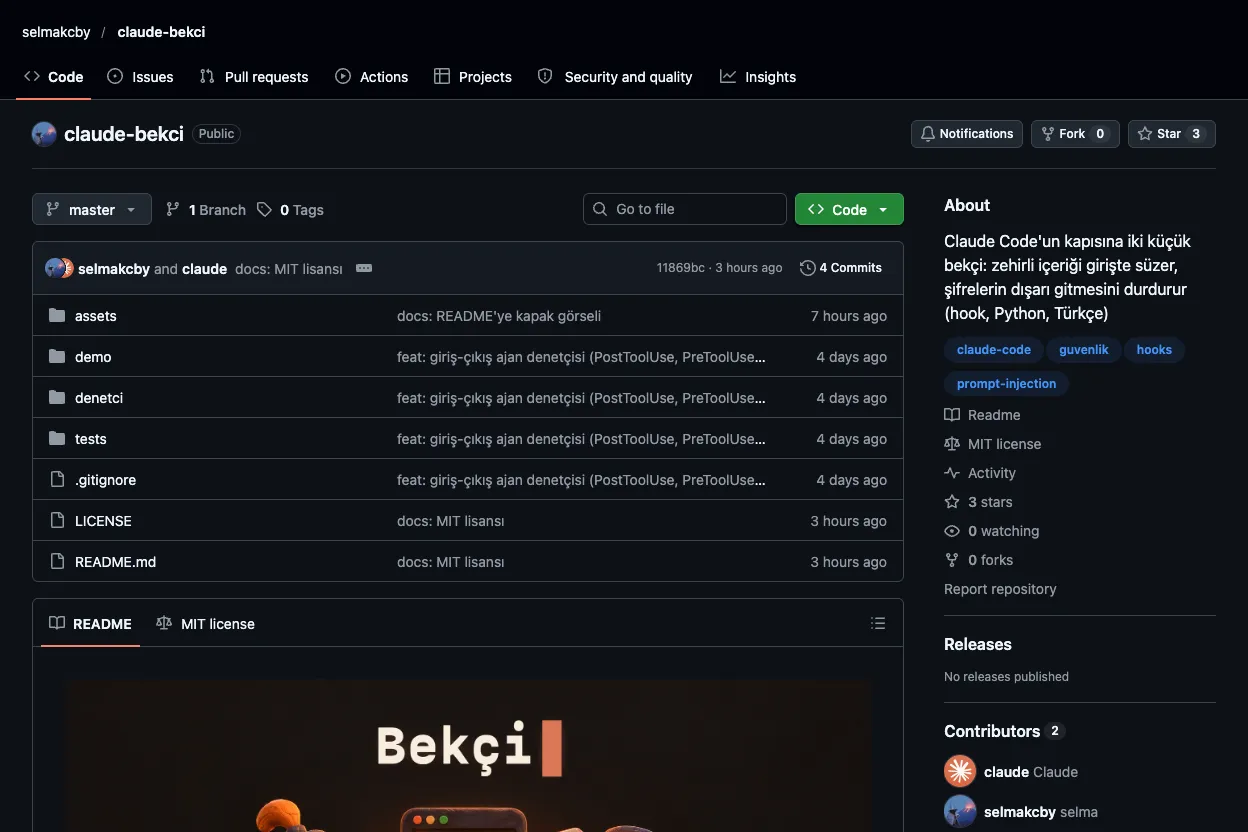
Claude Bekçi — Two Guards at the Door
Two small hooks for Claude Code: one filters poisoned content on the way in, the other stops secrets from leaving.
View on GitHub ↗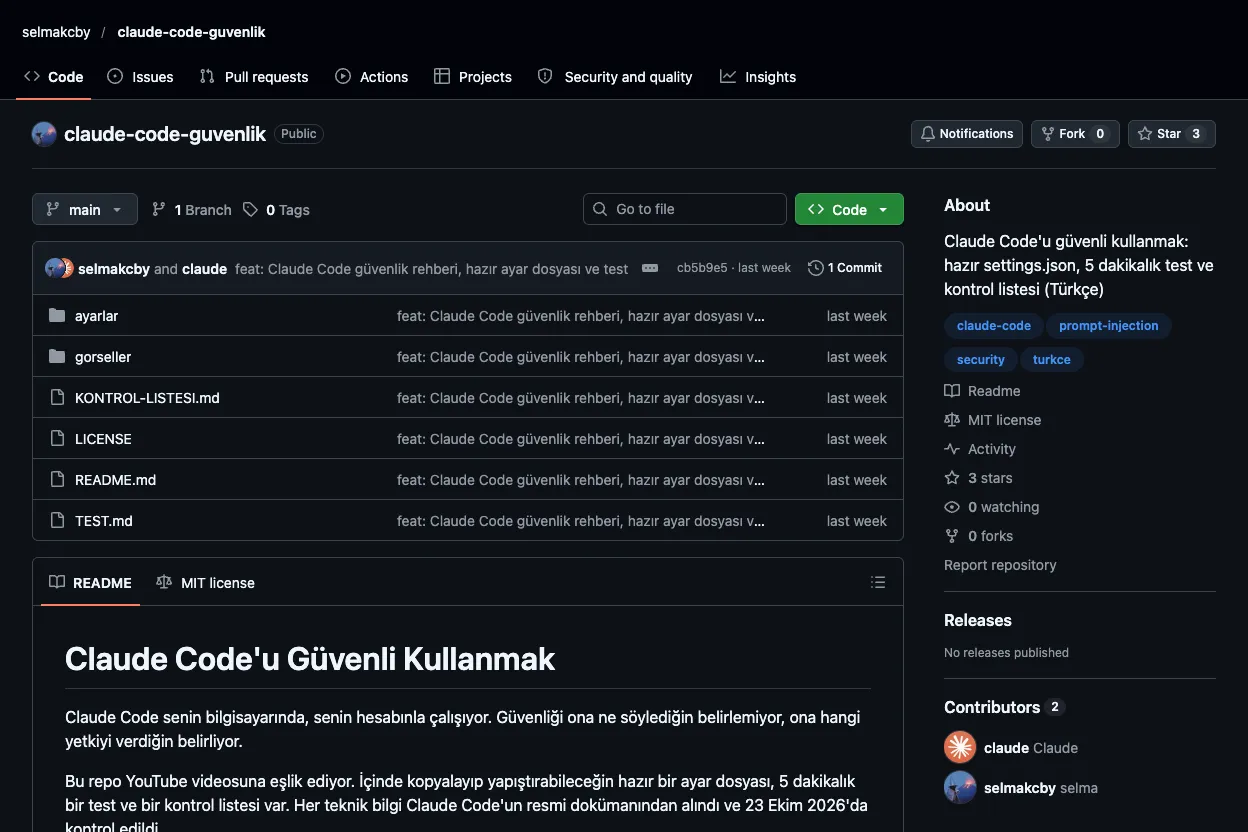
Safe Claude Code
A ready-made settings.json, a five-minute test and a checklist for using Claude Code safely.
View on GitHub ↗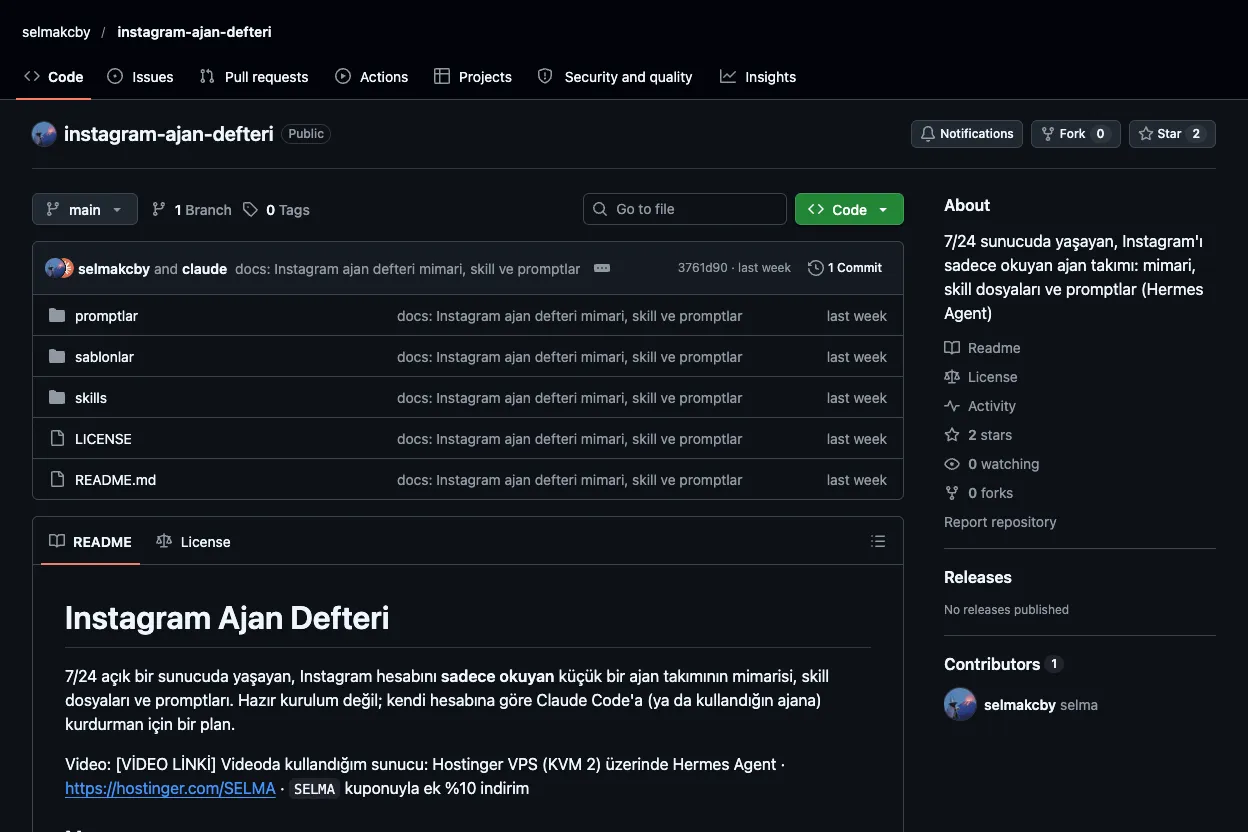
Instagram Agent Notebook
An agent team that lives on a server 24/7 and only reads Instagram: the architecture, the skill files and the prompts, built on Hermes Agent.
View on GitHub ↗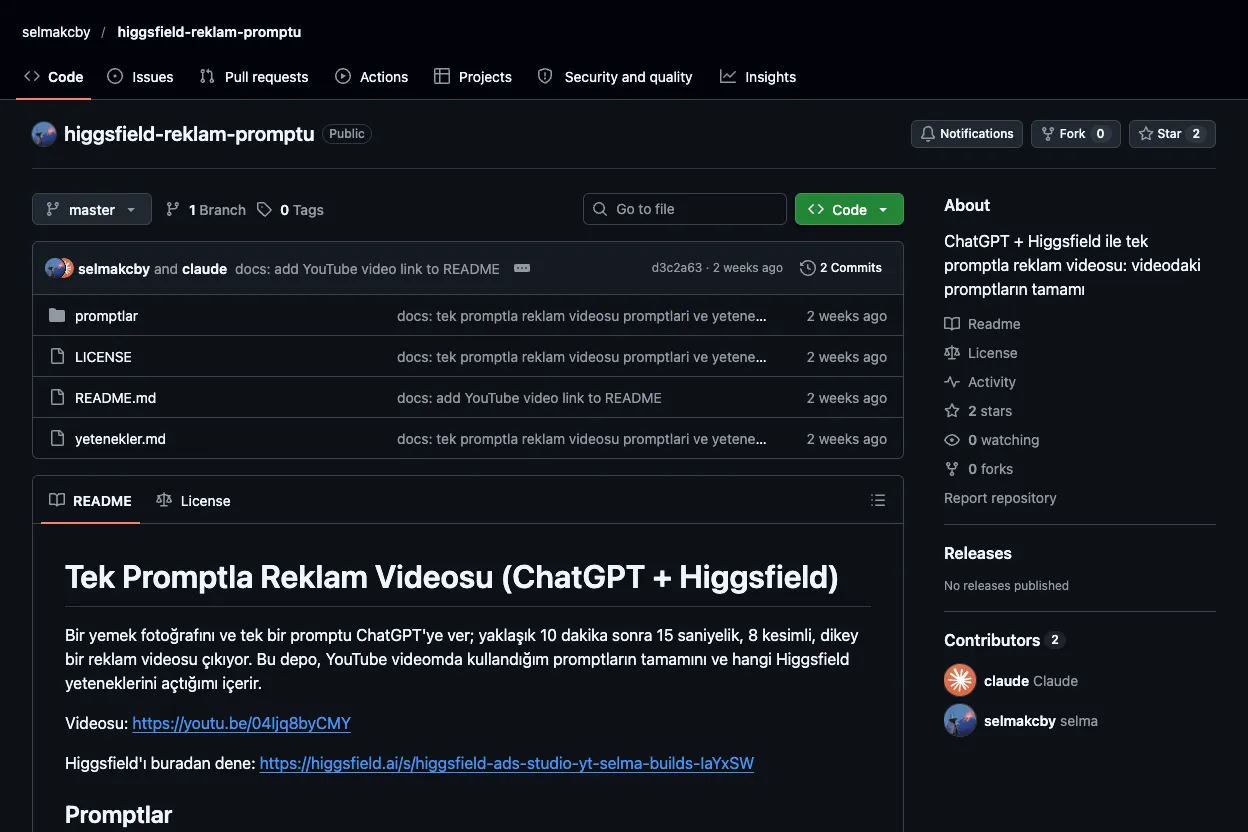
One-Prompt Ad Video
Every prompt from the video: an ad video from a single prompt with ChatGPT and Higgsfield.
View on GitHub ↗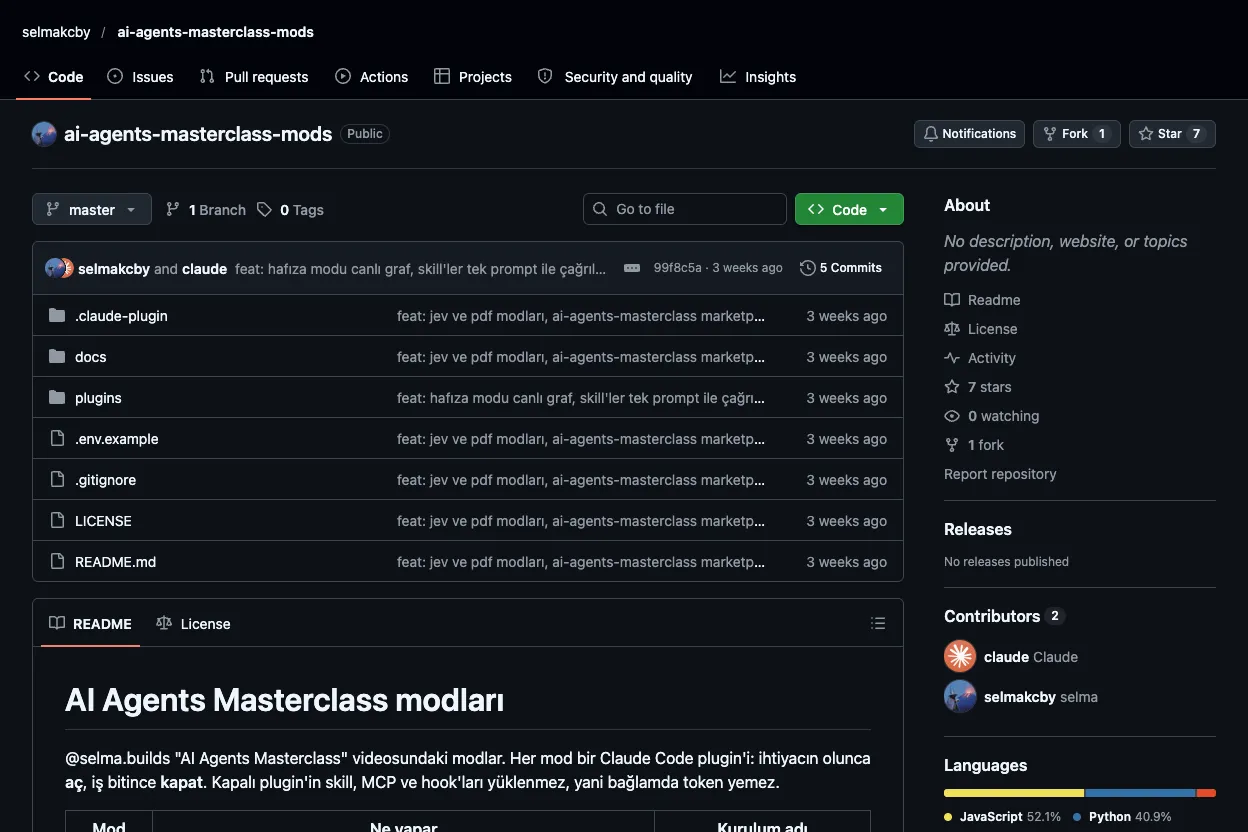
Agents & Claude Code Masterclass
The mods from the masterclass and its four level repos: the inbox, the research desk, the case file and the shop.
View on GitHub ↗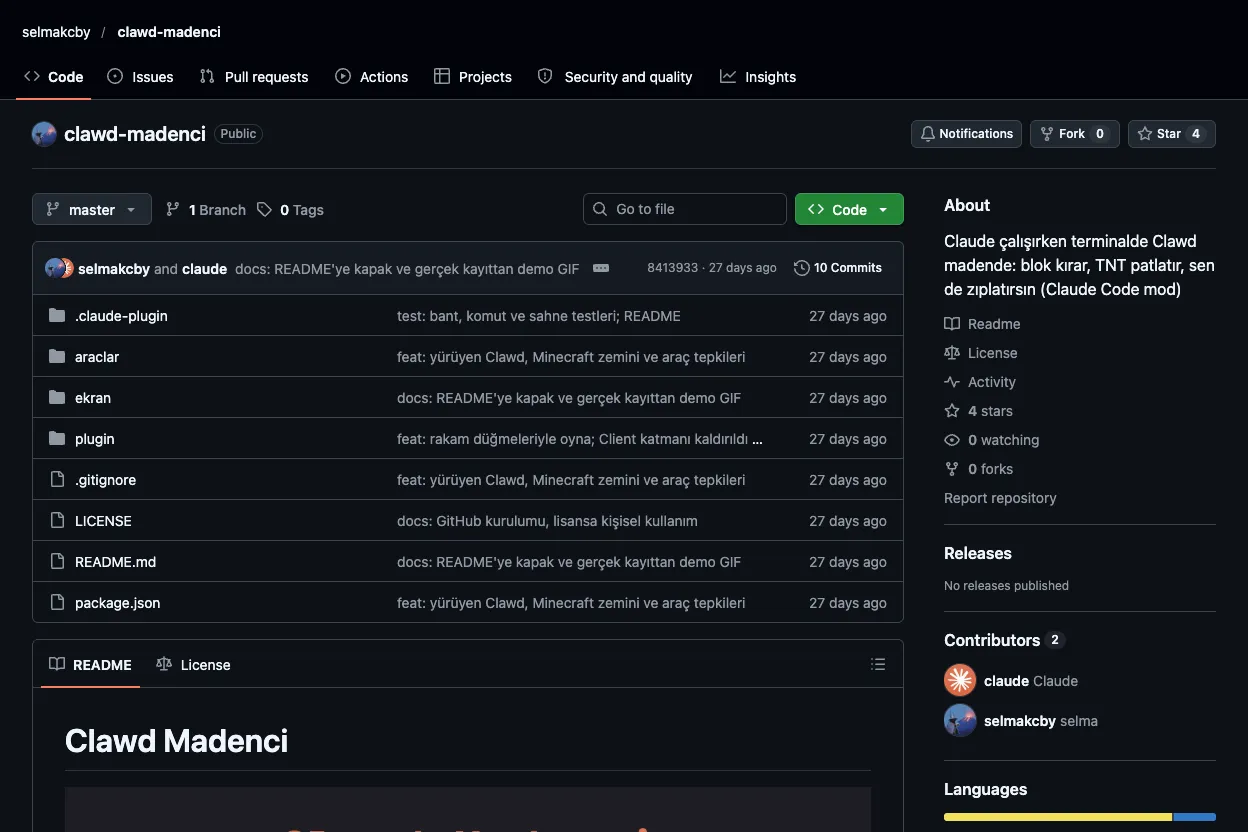
Clawd Madenci
While Claude works, Clawd mines in your terminal: breaks blocks, sets off TNT, and you make it jump.
View on GitHub ↗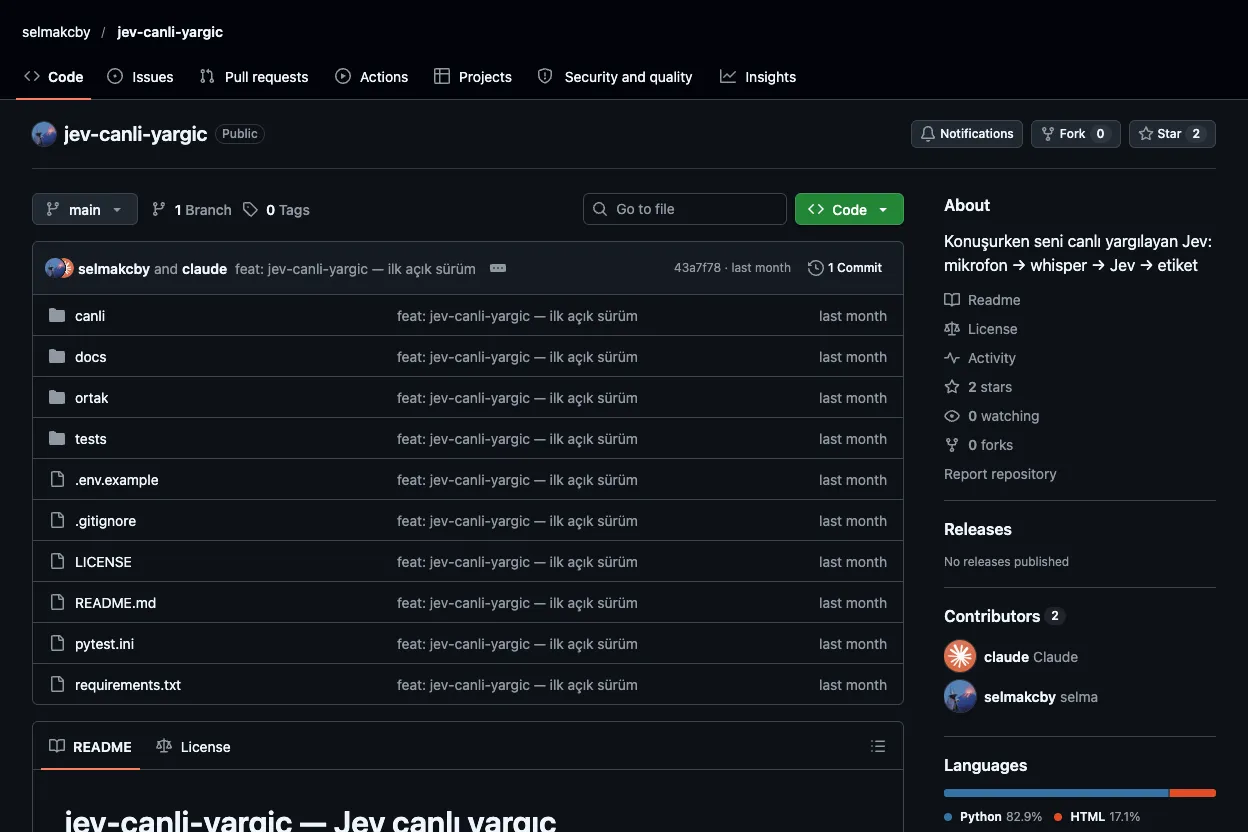
Jev — Three Builds
A live judge that listens while you talk, an outfit finder where the decision is Jev’s and the ranking is code, and the reflex layer of a Minecraft bot.
View on GitHub ↗
SaaS Closed Loop
A closed-loop template for Claude Code: a Stop hook as a zero-token eval gate, plus a skill and agents. It fixes a bug on its own until the tests pass.
View on GitHub ↗
Jarvis v1
OpenClaw and Claude Code joined through one shared Markdown vault: a Discord bot with shared memory, with a Turkish README and setup guide.
View on GitHub ↗
Claude Agents & Skills
A multi-agent Claude Code setup: four specialist agents (planner, ui-agent, builder, reviewer), skills and a Next.js demo project.
View on GitHub ↗
Computer Use Demo
A minimal, framework-free demo of Anthropic’s Computer Use API: about 100 lines of Python following the official best practices.
View on GitHub ↗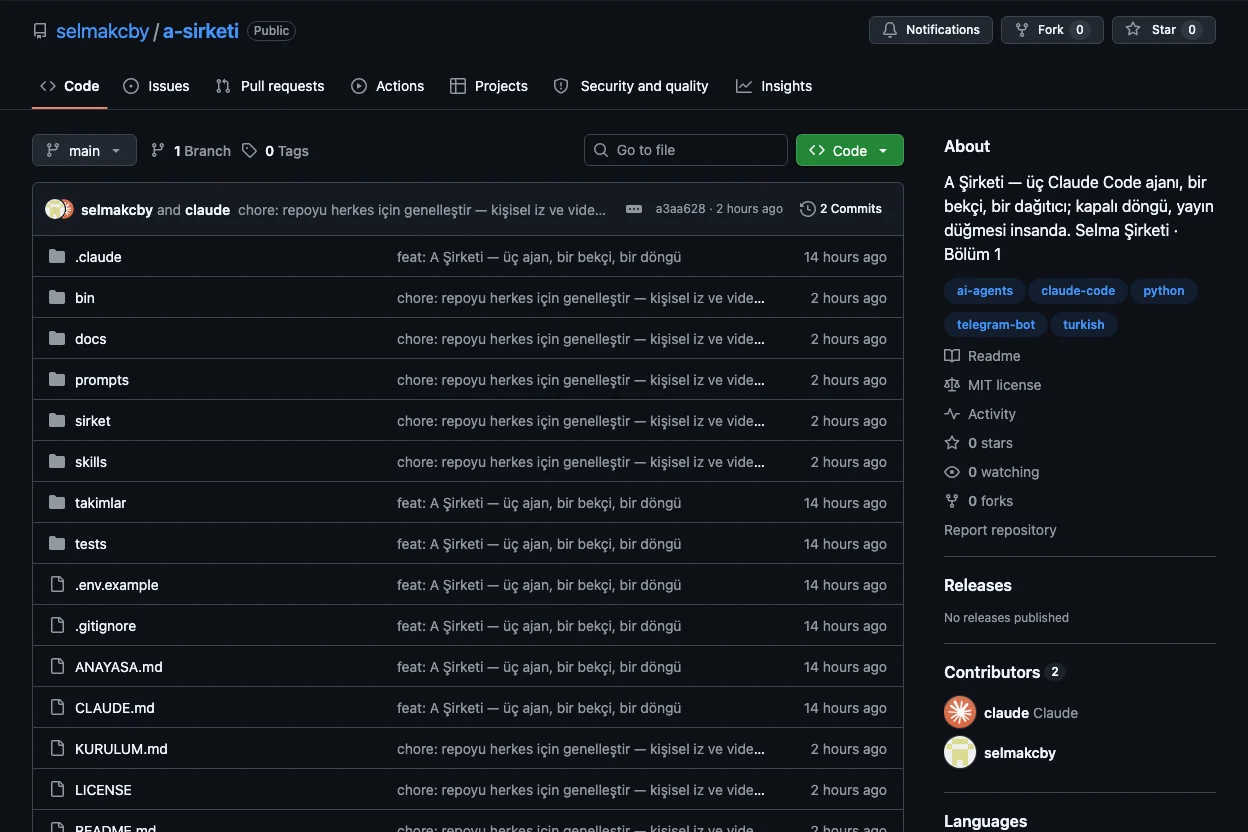
A Şirketi — Three Agents, One Guard, One Loop
The skeleton of my agent company, rebuilt from a clean folder on camera: three Claude Code teams driven by three API keys, a guard on the Stop hook, a dispatcher that chains them, and a constitution that keeps the publish button human. Twelve prompts to rebuild it yourself.
View on GitHub ↗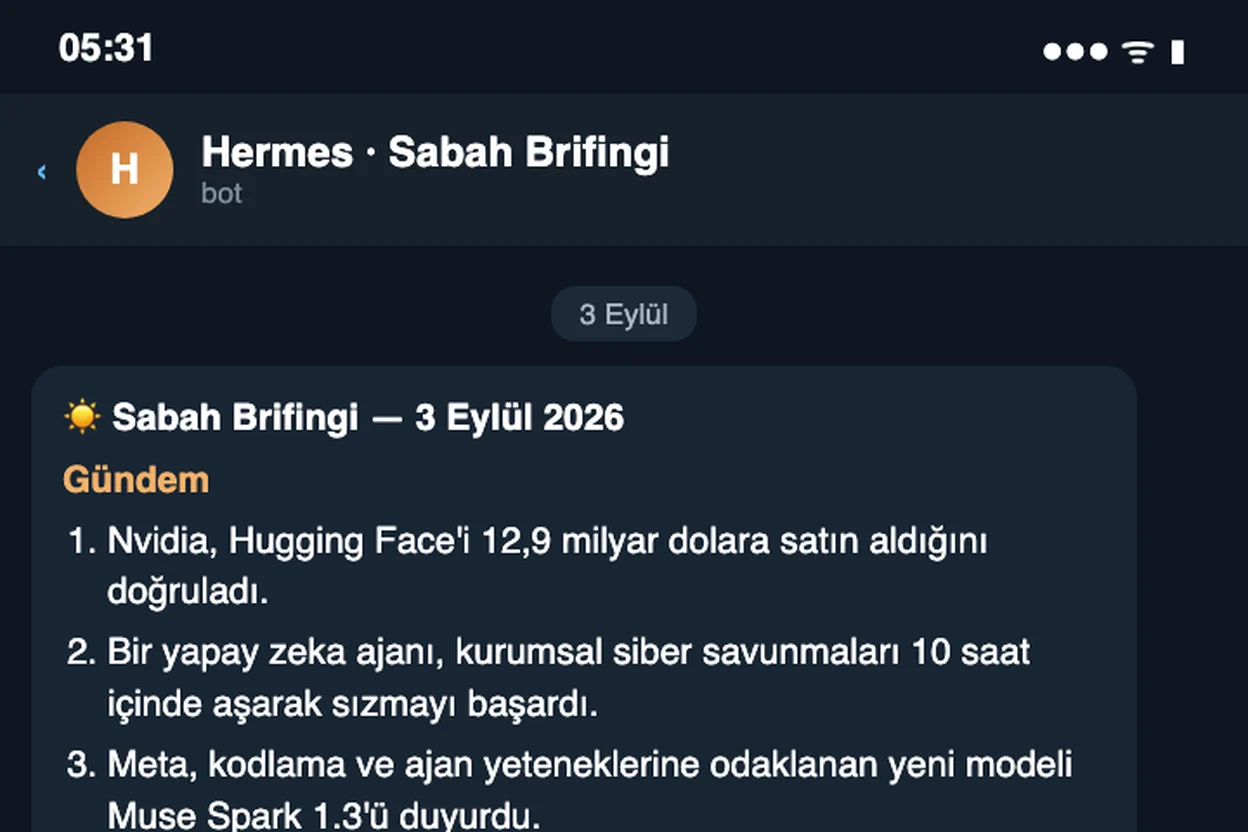
Sabah Brifingi — Hermes Agent on a VPS
An agent that wakes at 05:30 on a Hostinger VPS, scans X and RSS, writes one Turkish briefing and drops it in Telegram — three plain-language skills, the prompts from the video, and the Telegram and Oxylabs setup docs.
View on GitHub ↗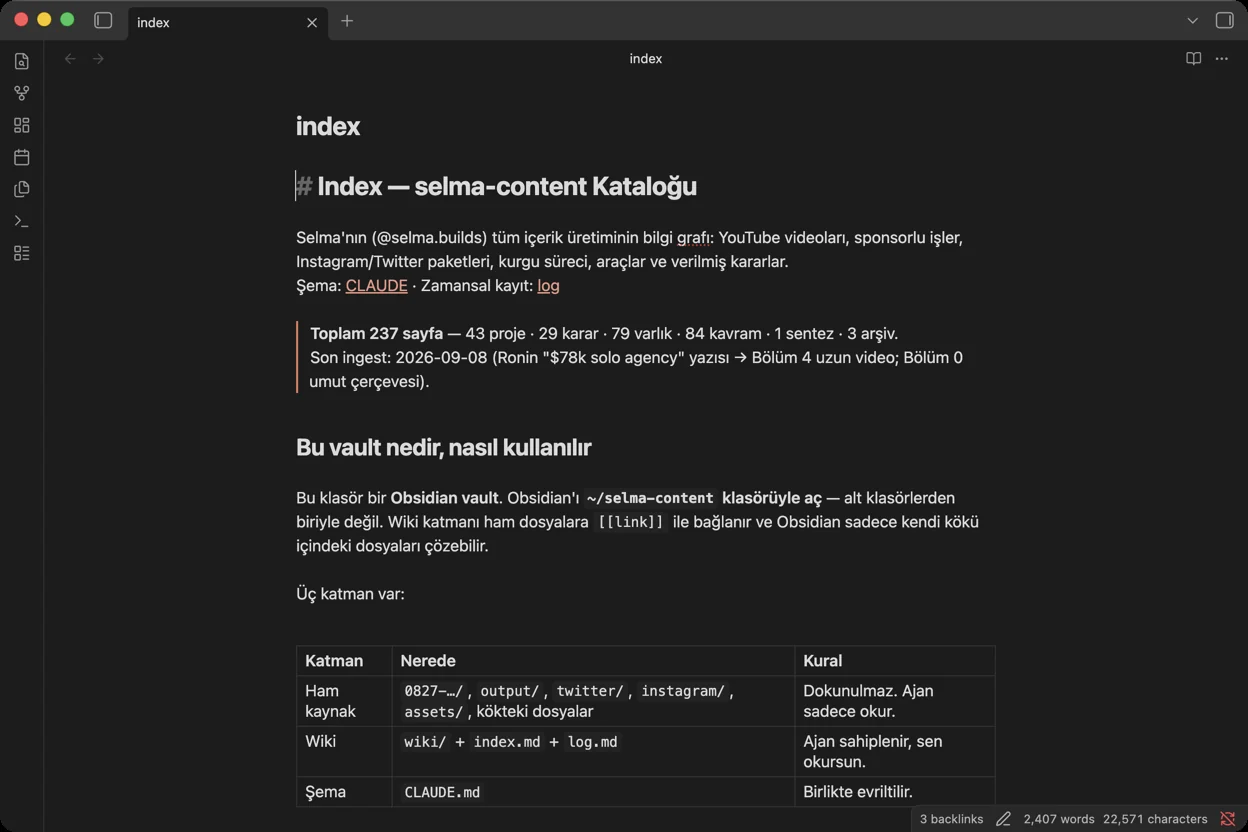
Claude Obsidian Kit
The agent-memory system from the video, packaged: a vault template, a CLAUDE.md constitution, the LLM Wiki skill, a lint script, and a guide that turns any existing folder into a vault.
View on GitHub ↗
Vault Radar
A live radar for your vault: see which notes the agent actually reads, instead of guessing what "memory" just did.
View on GitHub ↗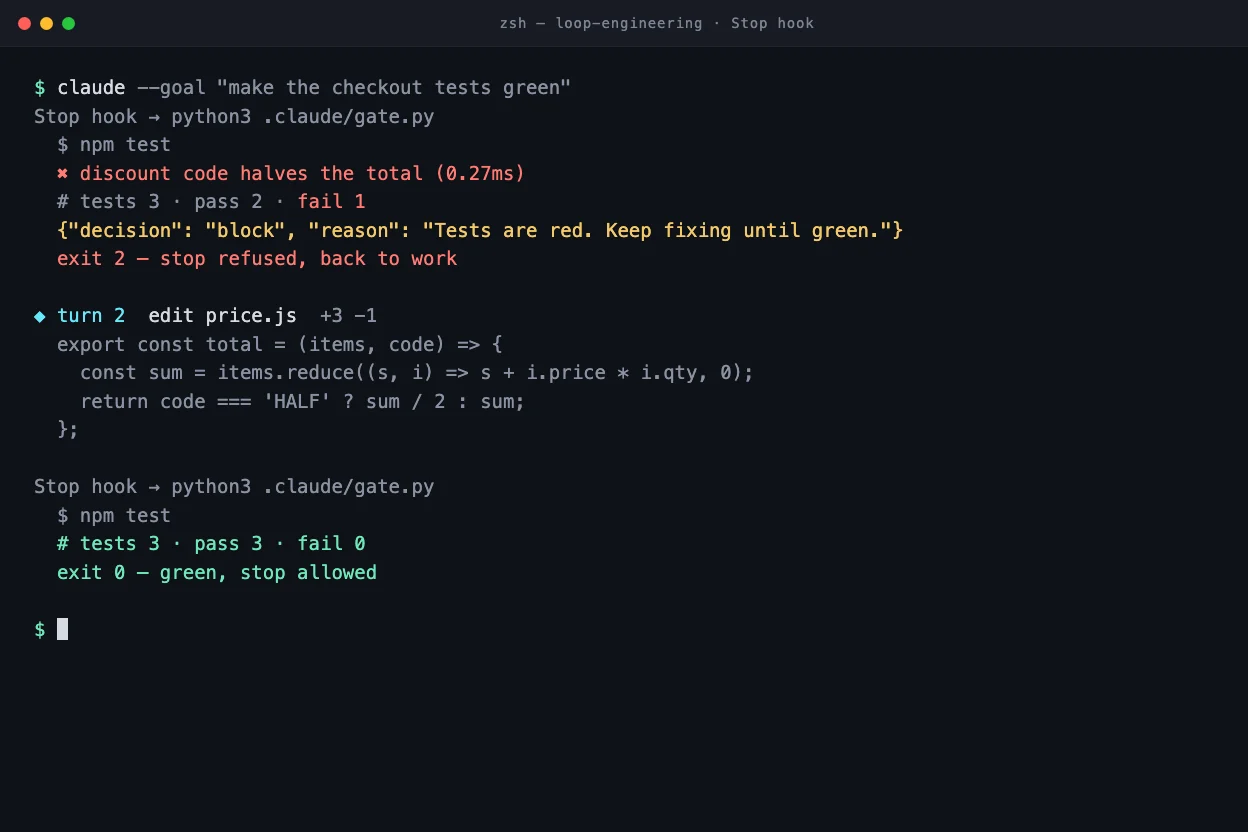
Loop Engineering
A Claude Code skill for self-running agent loops. A mechanical Stop hook runs the real test suite, so the model can never sign off its own half-built work.
View on GitHub ↗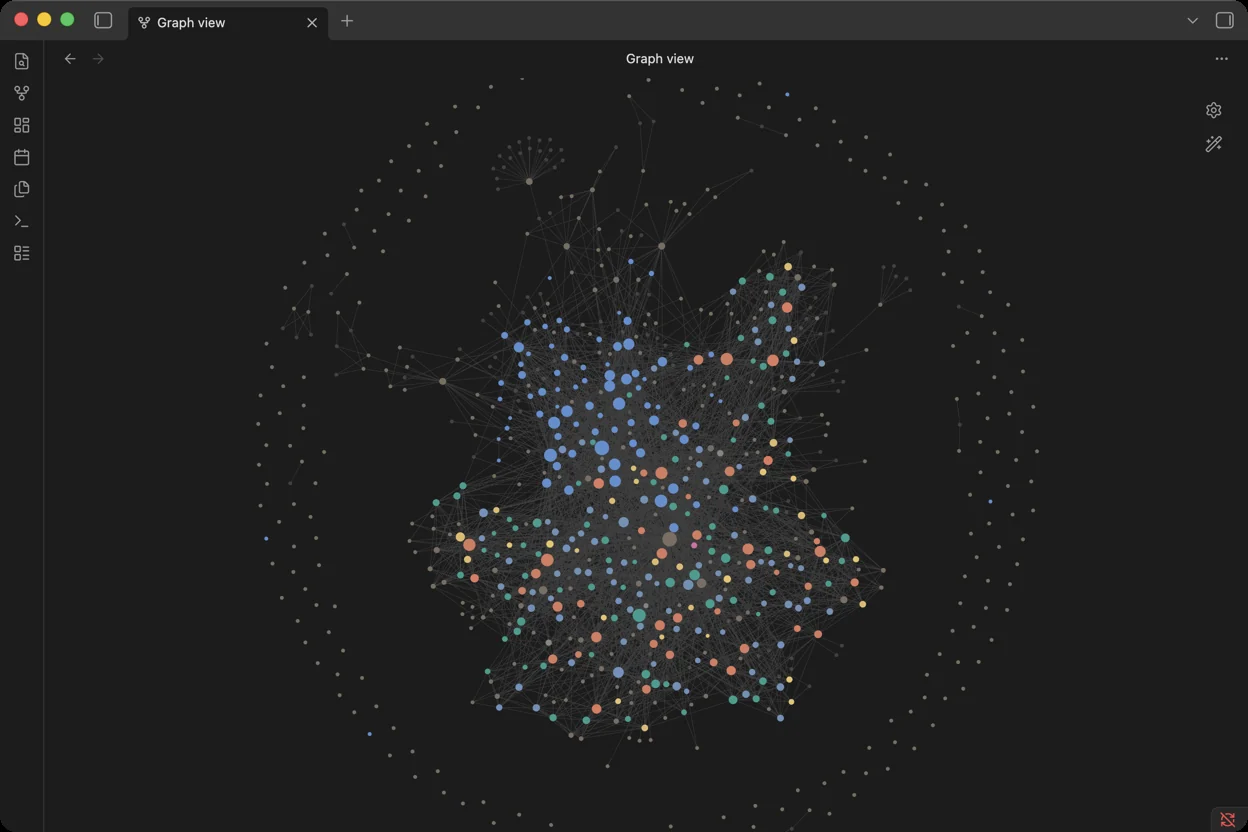
The Knowledge Engine
A vault an agent keeps writing — merging new sources into existing pages, updating entity notes and flagging its own contradictions.
View on GitHub ↗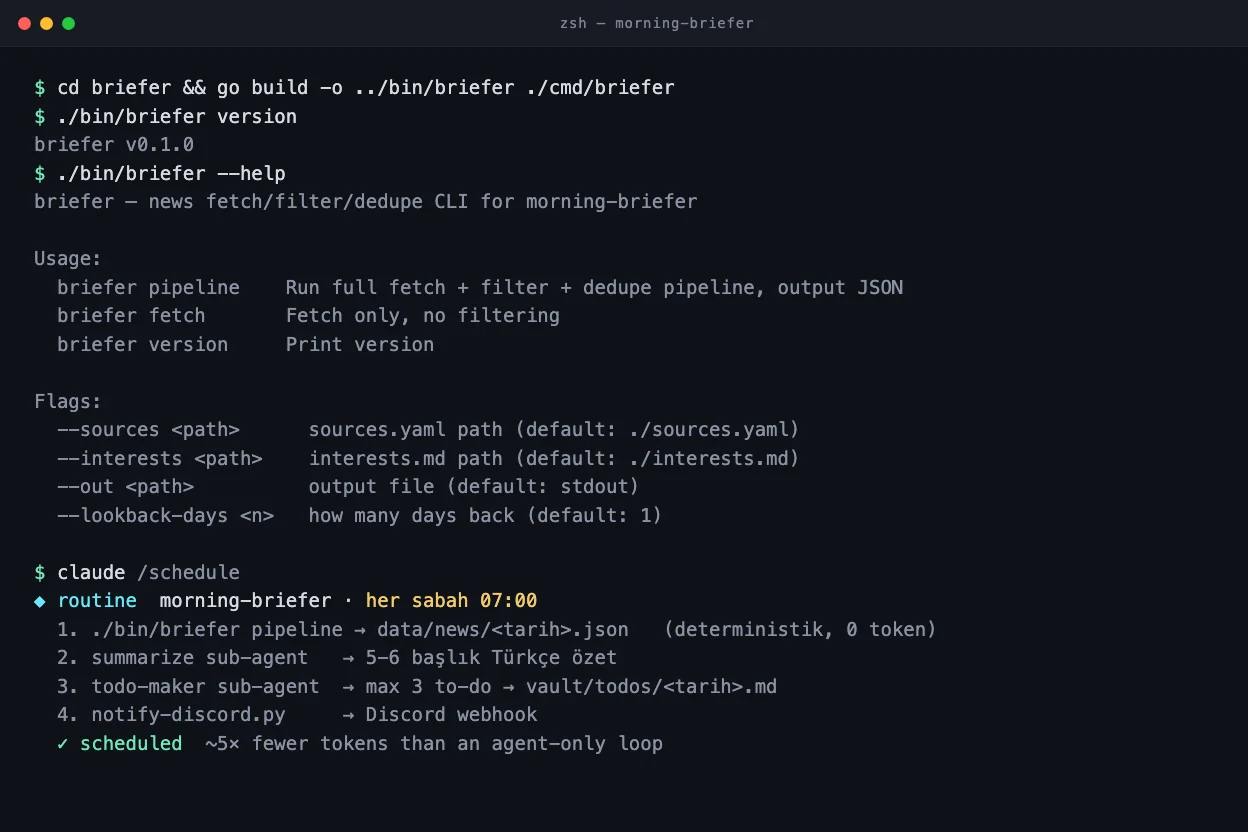
Morning Briefer
A token-efficient morning briefing: Claude Code routines drive a small Go CLI — roughly five times fewer tokens than an agent-only loop.
View on GitHub ↗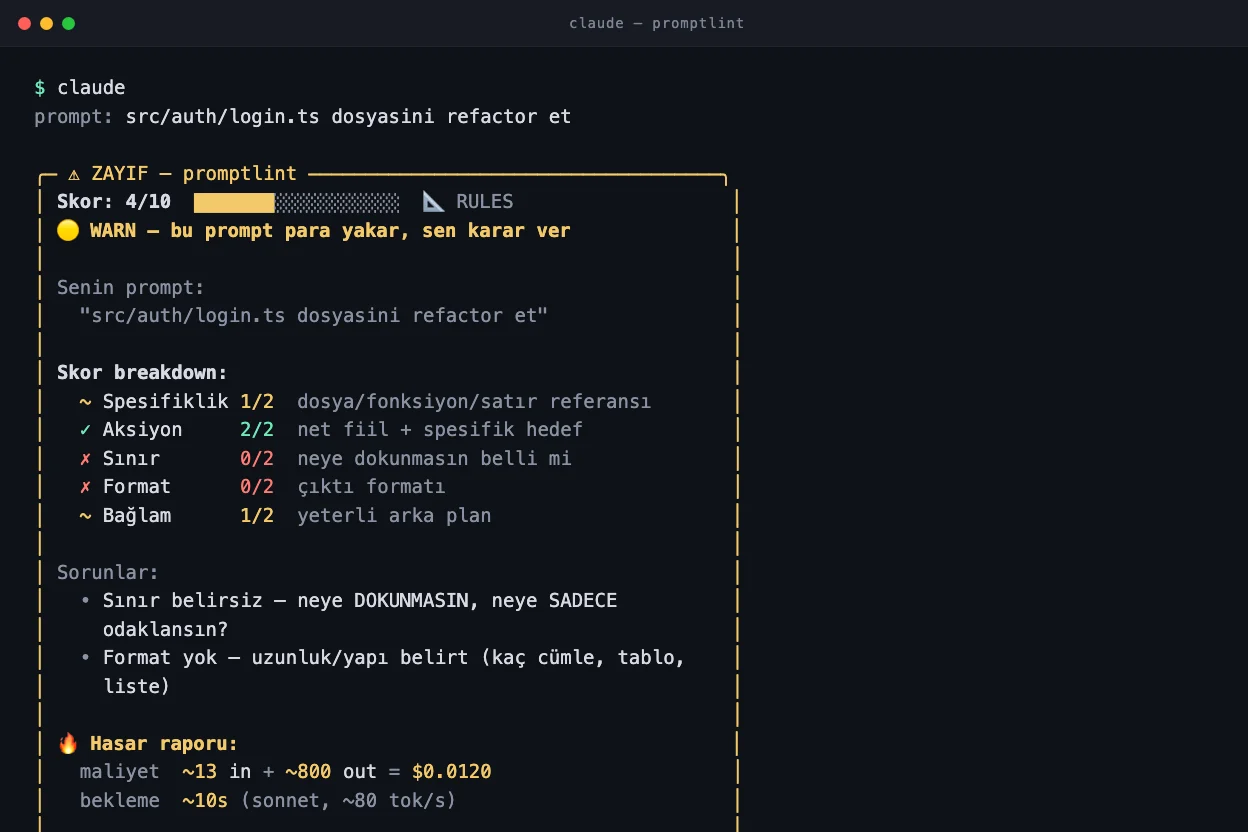
Promptlint
A Turkish prompt grader that lives inside Claude Code: real-time scoring and a token counter before you press enter.
View on GitHub ↗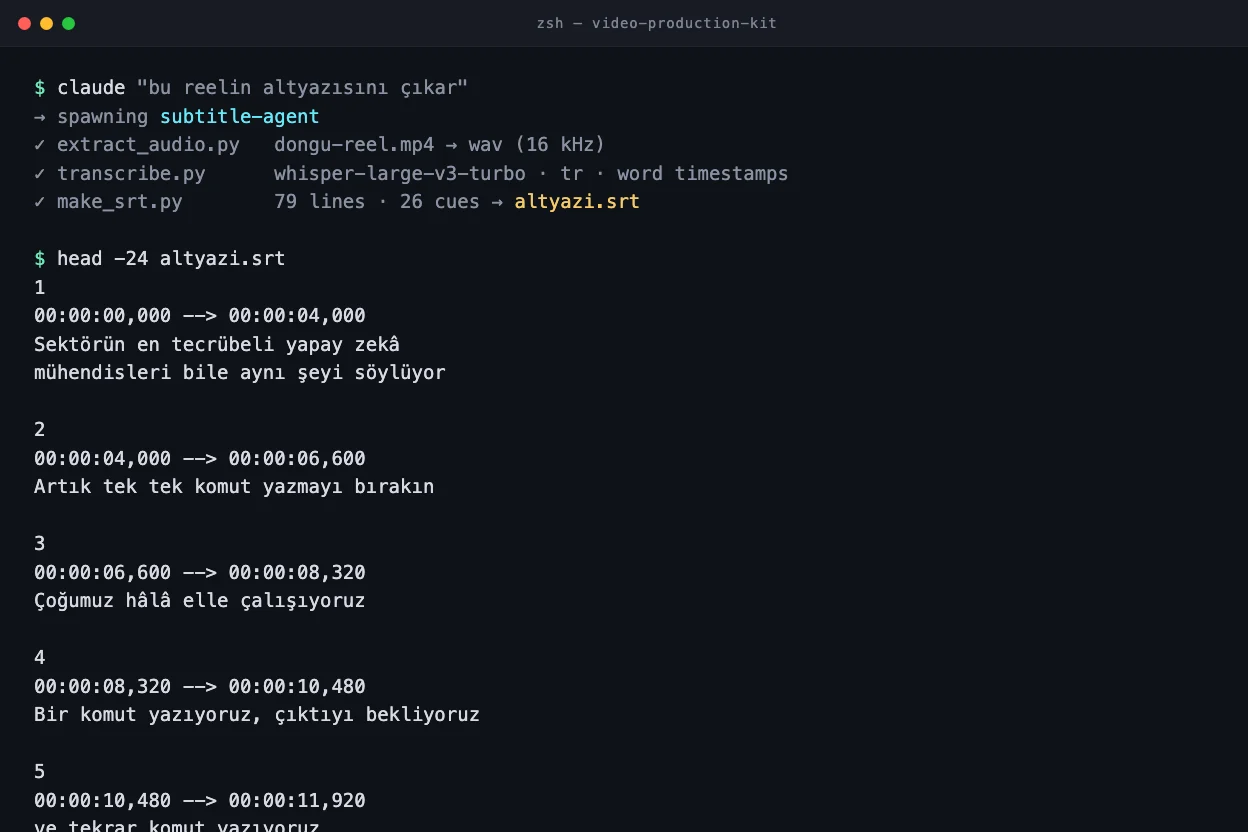
Video Production Kit
One skill takes a long raw recording to transcript, cut list, SRT subtitles and a YouTube description.
View on GitHub ↗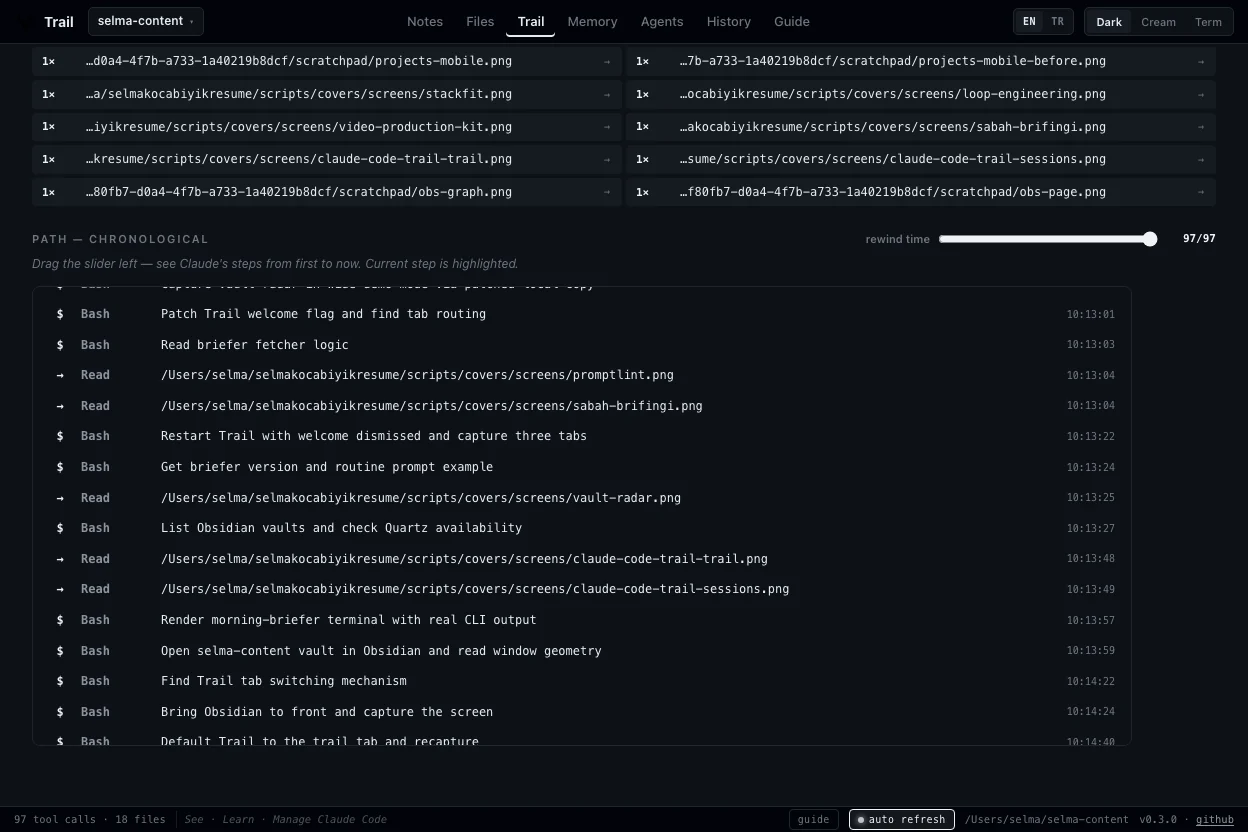
Claude Code Trail
See, learn and manage Claude Code from a local dashboard — Bun + vanilla JS, bound to 127.0.0.1 only.
View on GitHub ↗Beyond the channel
RAG Pipeline
Floorplanner · production, closed sourceProduction retrieval over architectural data. Hierarchical chunking that keeps a room attached to its floor, and its floor attached to its project.
StackFit
In development — no public build yetEleven questions in, the stack you should actually be using out — not the one that trends this week.
VU Amsterdam studies
Bachelor Thesis
VU AmsterdamMCP and Claude for AI workflow automation — the research that turned into everything above.
→26Text Mining & NLP
UniversityClassification and topic modelling over messy real-world text, with the evaluation harness that kept it honest.
→27Machine Learning Project
UniversityPredictive models explored and compared on a video game dataset — algorithms, performance and honest evaluation.
→28Statistics & R
UniversityStatistical analysis and visualisation in R — hypothesis testing on real datasets.
→29Collective Intelligence
UniversityEnergy level and population size dynamics — how group behaviour and collective decision-making emerge.
→30Algorithms & Deep Learning
UniversityNeural networks, optimization and evolutionary algorithms — the coursework foundations under the production work.
→31AI, Law & Ethics
UniversityEvolutionary algorithm models at the intersection of AI, law and ethics — what the systems above owe the people they affect.
→